Rhodes Grass for Racing Camels: What to Look For in Sudanese and Pakistani Hay
Rhodes grass is the everyday roughage on UAE camel farms. How it fits a racing camel's ration, how Sudanese and Pakistani hay compare, and how to check a load before you buy.
Green Graze Fodder team · · Updated · 3 min read

Quick answer
Racing camels still need long-fibre roughage alongside barley and pellets. Rhodes grass (about 7–11% crude protein) is the usual base. Sudanese hay is often softer and leafier and Pakistani hay comes in large compressed bales, but quality varies more between lots than countries — judge each load.
Rhodes grass (Chloris gayana) hay is the everyday roughage on most camel farms in the UAE. It is a warm-season grass with moderate protein — usually about 7–11% crude protein, depending on the cutting stage and origin — and plenty of fibre, which suits the camel's digestive system and keeps the forestomach working steadily.
Why fibre matters for racing camels
Racing and training camels get much of their energy from concentrates such as barley and feed pellets, but they still need long-stemmed roughage to chew and ruminate. Good grass hay slows the passage of feed, supports saliva production and lowers the risk of the digestive upsets that come with grain-heavy diets. Most trainers build the ration on Rhodes grass and add alfalfa or concentrate according to the workload.
Sudanese or Pakistani Rhodes grass?
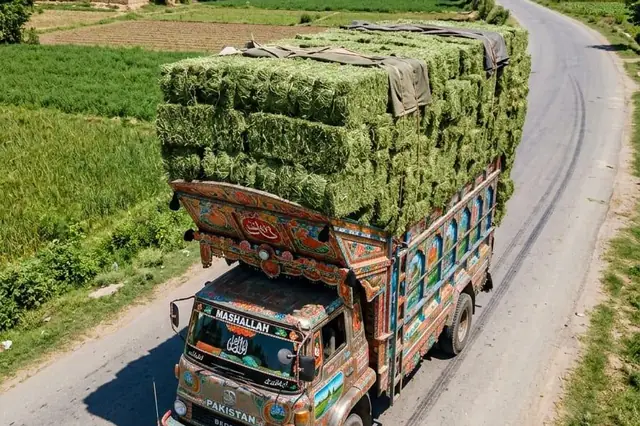
Both origins are widely traded in the UAE. Sudanese Rhodes grass from irrigated farms is often softer and leafier; Pakistani Rhodes grass is commonly available in large compressed bales at competitive prices. Quality varies more between lots than between countries, so judge each load rather than the label.
How to check a load
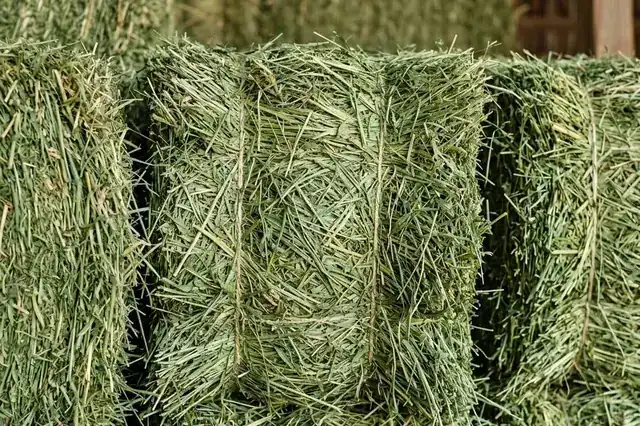
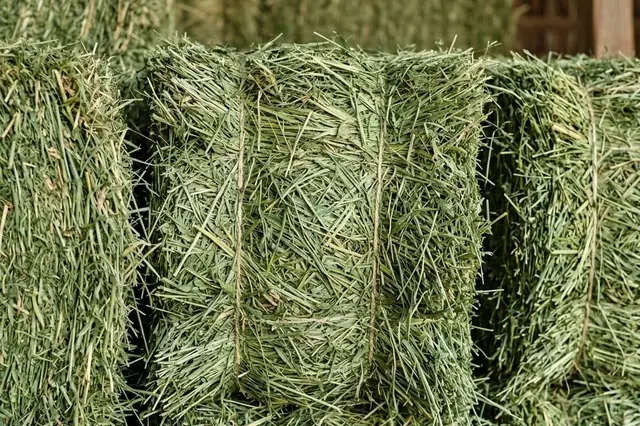
- Colour: green to pale green. Avoid heavily bleached or brown bales.
- Smell: fresh and sweet, never musty or sour.
- Leaf: more leaf and fine stems mean better palatability.
- Dust and mould: open a few bales. White or grey patches, or a cloud of dust, are reasons to reject them.
- Moisture: well-cured hay is dry and crisp. Damp or warm bales spoil and can heat up.
- On large orders, ask for a lab analysis (crude protein, ADF and NDF).
Feeding tips
Change feed gradually over 7–10 days, give clean water at all times, and weigh rations rather than counting bales. For racing animals, ask your vet or a nutritionist to set the exact ration.
You can compare current Rhodes grass offers and prices from UAE sellers on GrazeMarket, or call us on +971 55 150 9625 for bulk supply.
Common questions
Is Sudanese or Pakistani Rhodes grass better?
Both are widely used in the UAE. Quality varies more between lots than between countries, so check colour, smell, leaf, dust and moisture on every load.
Why do racing camels need hay?
Long-stemmed roughage keeps the forestomach working, supports saliva production and lowers the risk of digestive upsets on grain-heavy diets.
How much protein does Rhodes grass have?
Usually about 7–11% crude protein, depending on the cutting stage and origin.
More guides
 How to Check Hay Bale Quality Before You Buy: A UAE Buyer's ChecklistSix checks for Rhodes grass and alfalfa bales — leaves, maturity, colour, smell, softness and foreign matter — plus mould warning signs, when to lab-test, and a checklist for when the truck arrives.
How Much Does a Camel Eat a Day? Hay and Feed Guide for UAE OwnersAbout 1.5–2% of body weight in dry feed a day: the daily amount for 400, 500 and 600 kg camels, how to split hay and concentrate, water, and practical feeding tips.
 How to Buy Fodder Online in the UAE: GrazeMarket and the ADAFSA Fodder MarketThe ways to order fodder online in the UAE compared: ADAFSA's Fodder Market on TAMM for Abu Dhabi breeders, and GrazeMarket for live prices and delivery in every emirate.
 Rhodes Grass vs Alfalfa Hay: Which Does Your Animal Need?A side-by-side comparison of the two main hays in the UAE — protein, fibre, calcium, price per kg and which animals each suits — and how to combine them.