How to Check Hay Bale Quality Before You Buy: A UAE Buyer's Checklist
Six checks for Rhodes grass and alfalfa bales — leaves, maturity, colour, smell, softness and foreign matter — plus mould warning signs, when to lab-test, and a checklist for when the truck arrives.
Green Graze Fodder team · · 4 min read
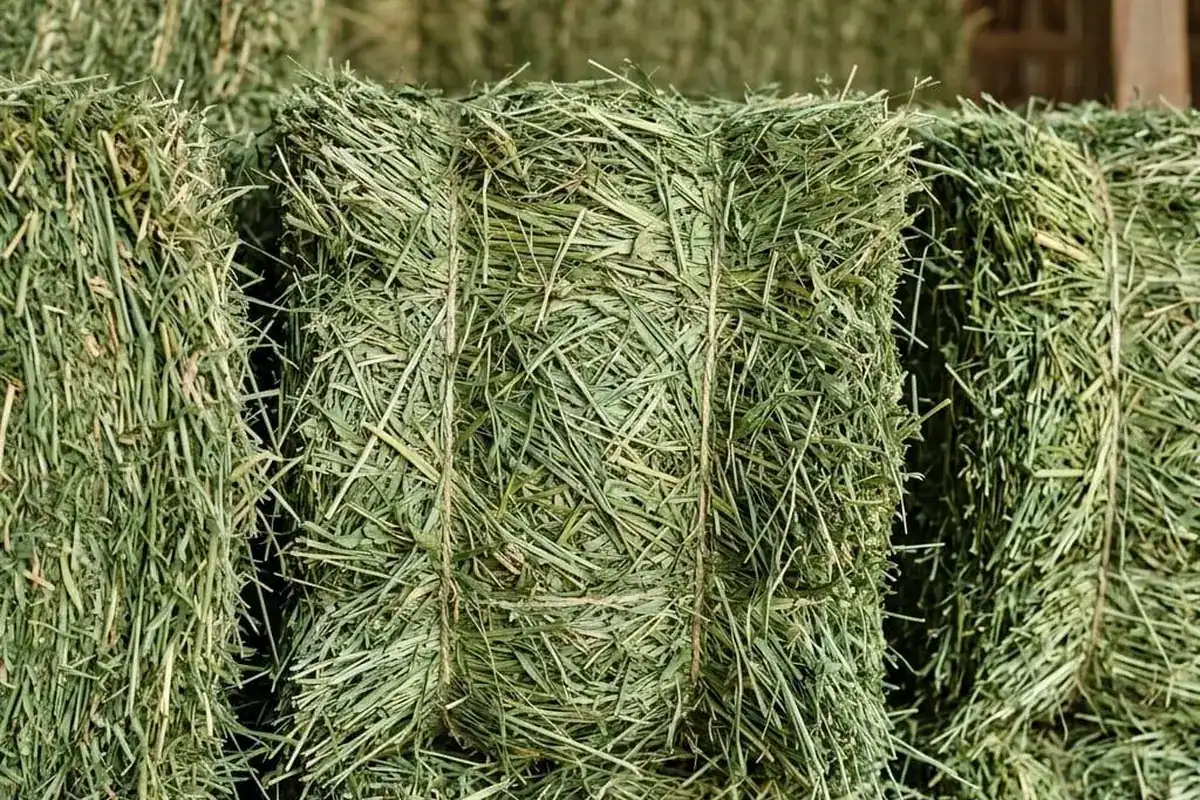
Quick answer
Open at least three bales and check six things: plenty of leaves, few seed heads or flowers, a green colour inside, a fresh sweet smell, soft stems, and no mould, weeds, dust or plastic. Lab-test large loads for protein and fibre.
Good hay looks, smells and feels right. Before you pay for a load of Rhodes grass or alfalfa, open a few bales and check six things: leaves, maturity, colour, smell, softness and what else is in the bale. It takes ten minutes and tells you most of what a lab test would.
Check 1 — Leaves
Leaves carry most of the feed value — about two-thirds of the protein in hay is in the leaves. Pull a handful from the middle of a bale. Good alfalfa is leafy, with leaves still attached to the stems; if they fall off as dust when you shake it, much of the protein is already on the floor of the truck. Leaves shatter easily when hay is very dry (under about 15% moisture), so handle samples gently.
Check 2 — Maturity
Younger hay is better hay. In Rhodes grass and other grass hays, look for seed heads: many open seed heads mean the grass was cut late and is more stem than leaf. In alfalfa, buds or only a few flowers mean it was cut early; lots of flowers or seed pods mean it was cut late and has less protein.
Check 3 — Colour
A bright green colour usually means the hay was cured well, but colour alone can mislead. Sun-bleached outer layers are common in the UAE and the hay inside can still be good, so always open the bale. Hay that is dark brown or black inside was usually baled too wet or rained on, and has lost feed value.
Check 4 — Smell
Good hay smells fresh and sweet, like cut grass. A musty, mouldy or sour smell is a warning sign. A strong tobacco-like smell and brown colour inside the bale mean it heated after baling — usually because it was baled at more than about 20% moisture.
Check 5 — Softness and condition
Animals eat more soft hay than brittle, stemmy hay. Squeeze a handful: it should bend, not stab. Bales should be well shaped and tight. Hay that feels damp or warm inside can go mouldy within weeks in storage.
Check 6 — What else is in the bale
Look for weeds, sticks, plastic, stones, sand and dust. Clean hay of one type is easier to feed and safer. Some weeds are toxic, and dirt and plastic can harm animals. Shake a few flakes over a clean sheet to see what falls out.
Mould: the deal-breaker
White or grey patches, clumps stuck together, or dust that rises when you break a flake are signs of mould. Do not feed mouldy hay to horses — they are especially sensitive to mould and dust. Camels, cattle, sheep and goats may refuse it or eat less. If a bale is mouldy, set it aside and tell the seller the same day.
When to test in a lab
For large or regular loads — a dairy, a racing stable or a big camel farm — a lab hay test is worth it. Take core samples from the centre of 20 or more bales and mix them into one bag. The report gives crude protein, fibre (ADF and NDF) and energy. As a rough guide, good alfalfa is about 17% crude protein or more, while grass hays like Rhodes grass are lower. Ask your vet or nutritionist to set the ration from the results.
A quick checklist when the truck arrives
- Open at least three bales from different parts of the load, not just the top
- Check the inside of each bale: colour, smell, leaves
- Squeeze for softness; feel for damp or warm spots
- Look for mould, weeds, dust and plastic
- Count the bales and check the weight matches what you ordered
- Photograph any problem and send it to the seller straight away
Where to buy
On GrazeMarket every listing shows the hay type, origin, bale size and photos posted by the seller, with today's price per bale and per kg. See the Rhodes grass and alfalfa price pages for today's offers, or call or WhatsApp +971 55 150 9625.
Common questions
How can you tell if hay is mouldy?
White or grey patches, clumps stuck together, a musty smell, or dust rising when you break a flake. Do not feed mouldy hay, especially to horses.
What moisture should hay bales have?
Well-cured hay is dry and crisp. Leaves shatter easily below about 15% moisture, and hay baled above about 20% moisture can heat up and turn brown.
When should I test hay in a lab?
For large or regular loads — a dairy, a racing stable or a big camel farm. Take core samples from 20 or more bales and ask for crude protein, ADF, NDF and energy.
Sources
More guides
How Much Does a Camel Eat a Day? Hay and Feed Guide for UAE OwnersAbout 1.5–2% of body weight in dry feed a day: the daily amount for 400, 500 and 600 kg camels, how to split hay and concentrate, water, and practical feeding tips.
 How to Buy Fodder Online in the UAE: GrazeMarket and the ADAFSA Fodder MarketThe ways to order fodder online in the UAE compared: ADAFSA's Fodder Market on TAMM for Abu Dhabi breeders, and GrazeMarket for live prices and delivery in every emirate.
 Rhodes Grass vs Alfalfa Hay: Which Does Your Animal Need?A side-by-side comparison of the two main hays in the UAE — protein, fibre, calcium, price per kg and which animals each suits — and how to combine them.
Rhodes Grass for Racing Camels: What to Look For in Sudanese and Pakistani HayRhodes grass is the everyday roughage on UAE camel farms. How it fits a racing camel's ration, how Sudanese and Pakistani hay compare, and how to check a load before you buy.