How to Store Hay Bales in UAE Summer Heat
Sun, heat and humidity can ruin good hay within weeks. A practical checklist for storing Rhodes grass, alfalfa and straw on UAE farms — and the warning signs of a bale that is heating up.
Green Graze Fodder team · · Updated · 3 min read

Quick answer
Keep hay under a roof with open sides, on pallets off the ground, with gaps for airflow and away from water. Buy dry hay (below about 15% moisture) and check suspect stacks for heat: above about 55°C check daily, above about 65°C move the stack apart carefully.
Summer temperatures in the UAE regularly pass 45°C. Hay left in direct sun bleaches quickly as vitamins such as beta-carotene break down, and bales that pick up moisture — from humid nights, irrigation or a leaking roof — can grow mould or heat up. Good storage protects what you paid for.
Storage checklist
- Shade and airflow: keep bales under a roof with open or ventilated sides. A high roof lets hot air escape.
- Off the ground: stack on pallets or a raised, dry base so moisture cannot wick up from sand or concrete.
- Gaps: leave space between stacks and walls so air can move and you can inspect them.
- Covers: if hay must stay outside, use breathable, UV-resistant covers; plastic sheets trap condensation.
- Away from water: keep stacks clear of irrigation lines, drains and wash areas.
- First in, first out: use older bales first and label deliveries with the date.
Buy dry hay
Most storage problems start at delivery. Well-cured hay is crisp and dry (generally below about 15% moisture). Bales that feel damp, heavy for their size, or warm in the middle should be refused or used first.
Warning signs of heating
New hay can warm slightly in its first weeks, but rising heat is a fire risk. Push a metal rod or probe thermometer into the centre of suspect stacks. As a general guide, above about 55°C check daily; above about 65°C move the stack apart carefully and keep it under watch; a burning smell, smoke or charring means call Civil Defence (997) and do not open the stack yourself.
Silage and pellets
Keep silage bales sealed and shaded, repair any holes in the wrap, and use an opened bale within a few days. Store pelleted and bagged feed off the floor in a dry room, away from direct sun.
Need a steady supply instead of storing large volumes? Order smaller, more frequent deliveries at today's prices on GrazeMarket, or call +971 55 150 9625.
Common questions
How do I stop hay going mouldy in the UAE?
Keep bales dry, shaded and off the ground with airflow between stacks, and refuse damp or warm bales at delivery.
What temperature is dangerous in a hay stack?
As a general guide: above about 55°C check daily; above about 65°C move the stack apart carefully. Smoke or a burning smell means call Civil Defence (997).
Can I store hay outside?
Only under breathable, UV-resistant covers; plastic sheets trap condensation.
More guides
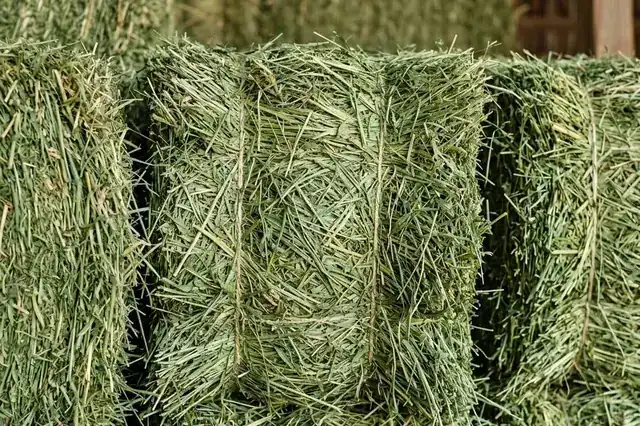 How to Check Hay Bale Quality Before You Buy: A UAE Buyer's ChecklistSix checks for Rhodes grass and alfalfa bales — leaves, maturity, colour, smell, softness and foreign matter — plus mould warning signs, when to lab-test, and a checklist for when the truck arrives.
How Much Does a Camel Eat a Day? Hay and Feed Guide for UAE OwnersAbout 1.5–2% of body weight in dry feed a day: the daily amount for 400, 500 and 600 kg camels, how to split hay and concentrate, water, and practical feeding tips.
 How to Buy Fodder Online in the UAE: GrazeMarket and the ADAFSA Fodder MarketThe ways to order fodder online in the UAE compared: ADAFSA's Fodder Market on TAMM for Abu Dhabi breeders, and GrazeMarket for live prices and delivery in every emirate.
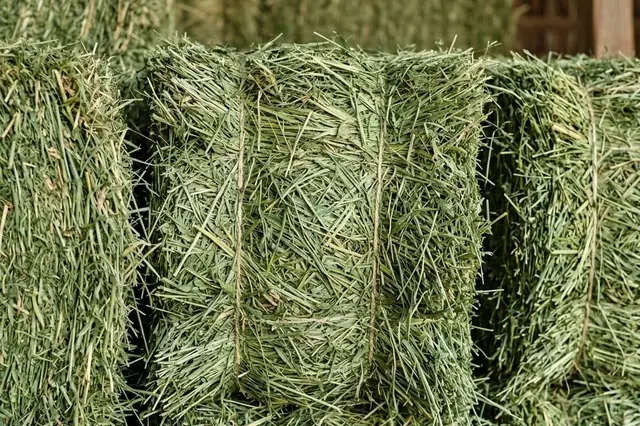 Rhodes Grass vs Alfalfa Hay: Which Does Your Animal Need?A side-by-side comparison of the two main hays in the UAE — protein, fibre, calcium, price per kg and which animals each suits — and how to combine them.